The Great Gonarezhou Gamble
The Universe Says "Are You Sure?
Late 2025, my mate Larry drops the kind of suggestion that ruins a perfectly good retirement plan: "Let's tour Gonarezhou." It was bucket-list material, so obviously we said yes immediately, because that's how bad decisions start.
Then the universe began throwing obstacles at us like it was auditioning for a disaster movie. Global politics rattled the Middle East, and diesel prices went up like a hot air balloon. Fruit and veg got banned at the borders thanks to fruit flies. Then Foot and Mouth Disease banned the meat too. Then it rained. Biblically. Bridges closed, roads closed, and every possible sign pointed to "please reconsider."
We went anyway. Obviously. Let’s skip the first 2000km from Cape Town to Tsepise and start there. It was long, trucks and trucks and more trucks. And visit family along the way…
Into the Wild (via Passport Dancing)
Just after seven, we're on the road, sun in our eyes, mercifully few vehicles coming the other way. Just after eight we reach the Pafuri gate and check in. No, we're not stopping here — we're pushing through to Mozambique. The gate officials have, interestingly, never heard of Dumela Safari Lodge. We stop for coffee at the Pafuri lookout point above the Levhubu River and also visit Crook's Corner, where the Levhubu and Limpopo meet. A beautiful spot, though unfortunately also the recent scene of where, sadly, a young couple were murdered, but we won't dwell on it.
At the border post, we perform our border crossing rituals. South Africa: professional, quick, no drama. Mozambique: an entirely different vibe, all housed in buildings that looked like they'd been standing since the 1950s and never redecorated. Even the old flapped-out flags are not all the way up. We visited about 3 of these charming collections of old buildings, each requiring a different payment for reasons that remain somewhat philosophical. We hand over R100 for something — probably Meticais, but who's counting — and receive a receipt.
Then four customs officials asked to search the vehicle. We said "go for it!" enthusiastically. “Where do you want to start?” No, not what they want to do, but if we can provide them with an R one zero zero permit, we can go now. We “provide” with a "R100 permit" instead. No receipt. Lesson learned instantly: pay the informal toll, or lose the whole day with officials searching, slowly, taking their time.
From here it's a rough two-track road to Dumela Safari Lodge, beginning with a steep climb to reception. We arrive with hard tyres and optimism. Four beers —cold 2Ms — are purchased immediately. And firewood. Then came the instructions: right here, left there, through the "lagoon," then so-and-so. "Lagoon" turned out to be marketing language for “a quaint river crossing, a water pool full of enormous rocks and deep mud, thickly mixed with elephant and cow dung. Smelling absolutely delightful” And it did smell! The Cruiser stops, mid-crossing, wheels in the water. Someone (me) had to wade in knee-deep in this dinosaur-era mud pool.
I climb out, get my Mozambican Mud therapy, turn the wheel lockers in, get back in and apply everything available, and the Cruiser grumbles its way out.
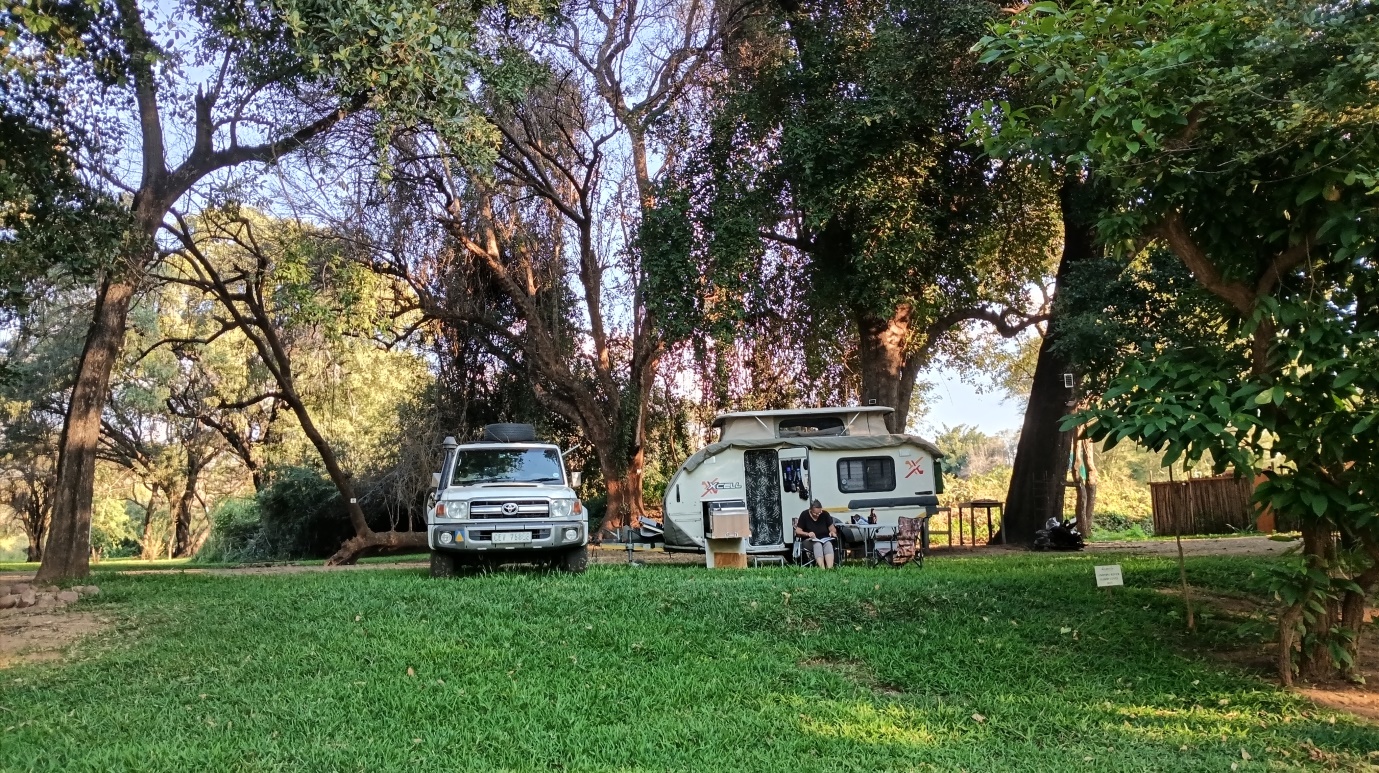
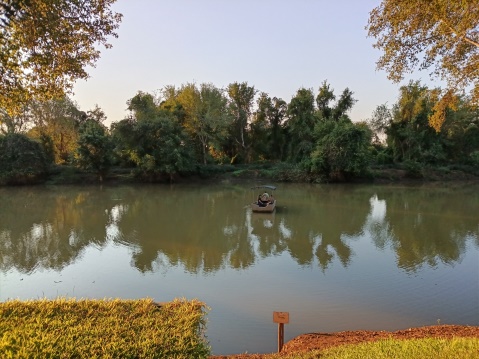
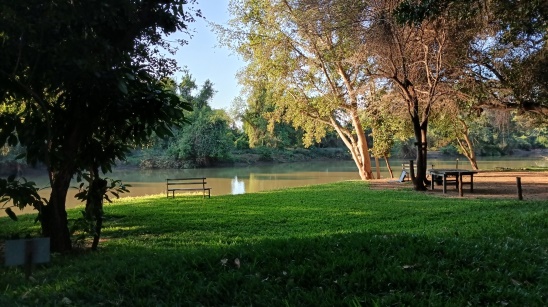
At camp, a "robust discussion" broke out between husband and wife about where exactly the caravan should be parked and why it cannot. We reach a settlement acceptable to all parties. While we were busy unpacking, a crocodile catches an enormous catfish in the Limpopo, violently ending its life as all goes under water again. Birds are chirping, life goes on as if nothing has happened. Peaceful.
Overnight, an elephant did some landscaping and pushed a tree across the road. We throw a rope over it, drag it aside and hang for dear life — just enough clearance for the vehicles to squeeze through. Good morning, Mozambique.
In the rocky mud-pool crossing, the Cruiser stops. All four wheels spin like hamster wheels, going nowhere. Tyres already deflated but now caked with this ooze. Get sand tracks out. Sand tracks in. Spinning. More tracks. Cruiser now half out, still spinning, front wheels on hard ground. Eventually the tow rope comes out and with a gentle tug we haul ourselves and caravan free. Note to self, get other tires.
It's only 74 kilometres, but what kilometres they are. The road is bad. Very bad. It takes us the entire morning. Along the way, five toll gates — each consisting of a pole across the road and a young person asking R50 per vehicle, which one pays without discussion. Through every small settlement, children sprint to the roadside with outstretched hands shouting Sweets! Whether they want actual sweets or whether this is a unique Mozambican way of saying hello, we never fully establish.
Then we get to the ferry: Roger's Ferry. The ferry does not inspire confidence. A vessel that looked structurally opposed to the concept of floating. It is a flat platform, operated by men with long poles.
Our companions go first. It looks terrifying. The crew pushes and hauls the thing upstream along the bank, loads a few more passengers, then shoves it into the fast main current. Just when it appears certain they'll miss the far bank entirely, they make it.
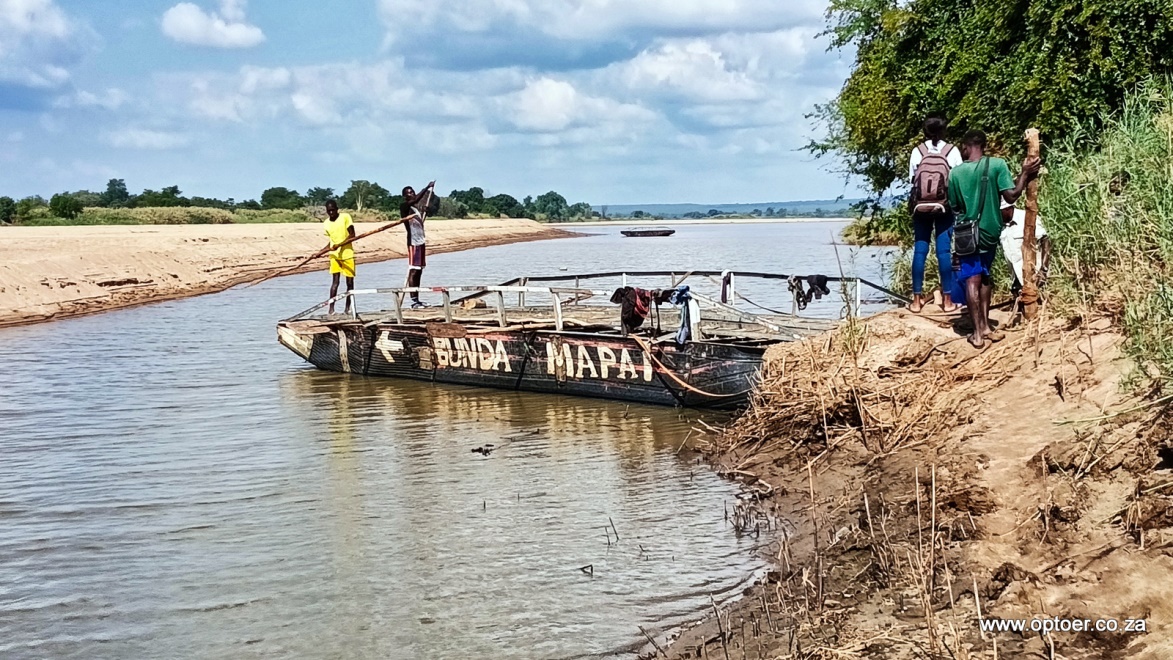
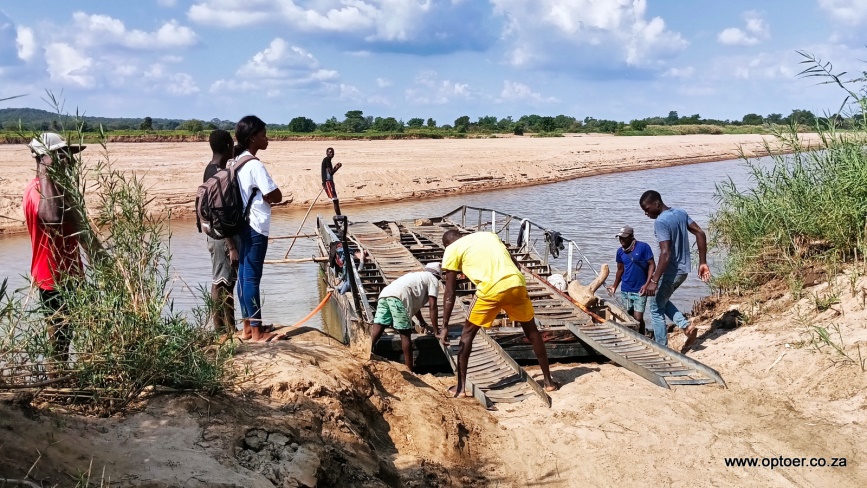
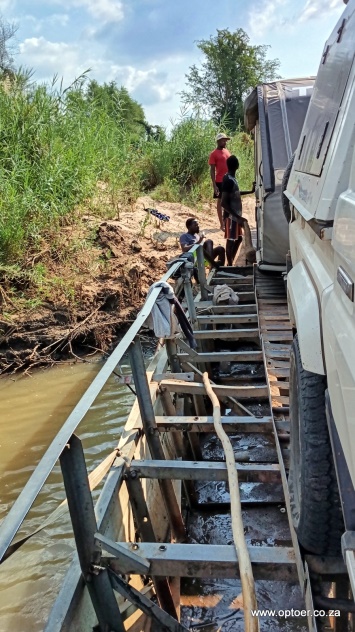
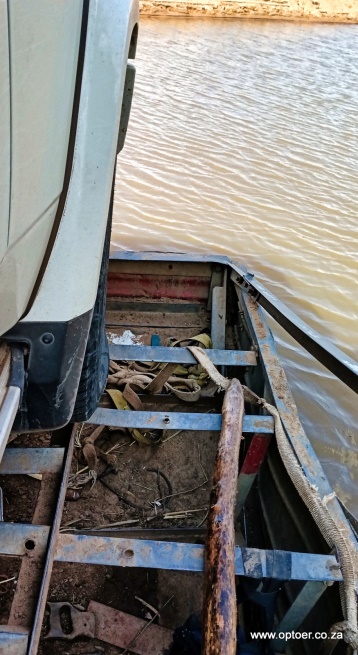
Then it was our turn — car and caravan. We drove on slowly, heart in mouth. The moment you feel you might slide off the edge and into the river, they stop you, and there you float. Poles pushed us through mud, a rope hauled us upstream, we hit a submerged tree stump, and the whole raft lurched dramatically while I fought the urge to "steer" using the truck's actual steering wheel (it does not work that way, eetjit!)
Then, into the fast-flowing Limpopo you get pushed; some are poling, some are paddling, and one bloke is bailing water out of the ferry. You're convinced the far bank is not going to happen. It happens. We drive off. We pay R750 for car and caravan, plus R50 for cold drinks.
On the way to Mapai, we encounter two mambas enthusiastically tangled around each other in the middle of the road. Once they sort themselves out and leave, we continue and find diesel — cash only, no cards. My last R1000 buys 31.84 litres. We aim for the Zimbabwe border.
At the crossing, passports stamped, customs officials request a donation. My cash is now completely depleted after we departed our last R30.00.
Zimbabwe is, by comparison, practically a hug. Nobody asks for strange paperwork. Nobody asks for permits. Nobody asks for anything at all. It's after five, the sun is dropping fast, and we drive into the dark. About 22 kilometres down a two-track road we find Mabalauta campsite, Site 3.
Gonarezhou: Where the Animals Are in Charge
From here it turned into the trip we'd actually signed up for. Nights were a symphony of owls, bats, distant hyenas, and the occasional elephant disagreement across the river. A beautiful sunrise met us in the morning, and after coffee we drove to reception to officially check in for the night we already spent last night — which feels administratively wrong but very African. As we like it.
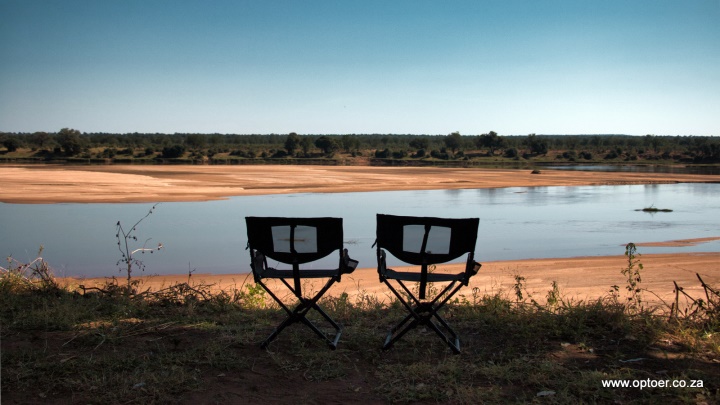
We buy diesel at US$2.05 per litre, twenty kilometres away, and take the recommended route to Lisoda. The roads wind through green trees that form canopies overhead like enormous umbrellas. Stunning. Occasionally an elephant has decided we need more exercise and pushed trees across the road for us to move. It appears elephants like to do landscaping. About 130 kilometres later, just before five, we arrive at Lisoda on the bank of the Runde River. Magnificent campsite. We braai and “kuiered” while we listened to the lions and hyenas having their respective conversations in the darkness.
Maintenance Day and the Elephant at the River
The morning brings fisheagles, jackals, impala and distant hippos. Today is maintenance day. A slow front-left puncture. The battery charging cable — comprehensively destroyed by those Mozambican lagoon roads — needs attention. The caravan's underbelly has also taken a serious blow in that “lagoon”, popping the rivets loose. Large rivets are required.
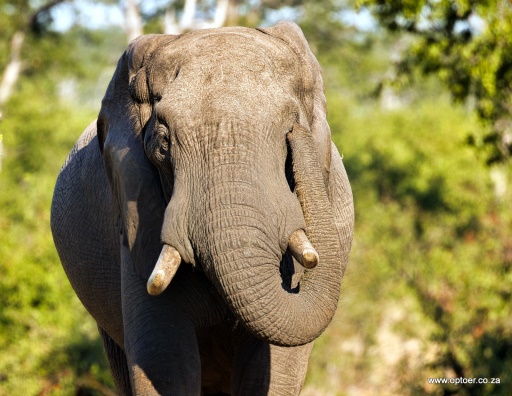
Large rivets are not available. Another plan must be made, as always. The sand tracks are still caked in Mozambican mud, so I drive about 7 kilometres to a river crossing to wash them. It's quiet; it’s peaceful, but with a slight nervous feeling. I've barely finished the first set when an enormous elephant appears. We stand and regard each other, sizing each other. He decides I'm in his waterhole and lodges a formal complaint by charging. I make myself as large as possible, holding the sand tracks above my head and now shouting I have nothing for you and the river is actually over there. He stops to reconsider my suggestion. Decides it’s insufficient and comes again. This time I slam the tracks together with a sharp crack. He reassesses the situation, concludes it's not worth it, and walks calmly to the river. I “calmly” continue washing the second set of tracks and drive back to camp. Hindsight, yes, this was a stupid idea.
That afternoon, a bull elephant grazes slowly towards the campsite, shaking his head now and then — whether at us or at the birds following him for insects, or at us, it's hard to say. Eventually he moves on, followed by a waterbuck with an impressive attitude.
Machinawa Pan: The Note Under the Stone
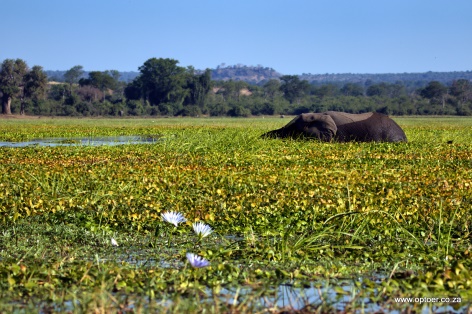
About to leave Camp Lisoda, we meet a group from our home town and chat before heading off again with the caravan — now officially named Antie — navigating steep climbs, gullies and elephant roadblocks with saintly patience.
We arrive at Machinawa Pan Campsite. A couple of oh wows! as you turn into the campsite. There are no adequate words.
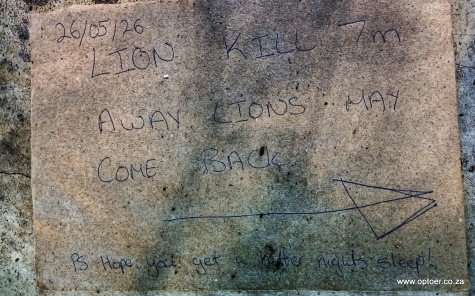
BUT… On the camp table, weighted under a stone, is a note from people who left two days ago: "7 metres in this direction — a lion kill. We hope you sleep better than we did." We catch occasional whiffs of something that has departed this world, but find nothing on investigation. We're still setting up when the first visitor arrives — an elephant, strolling down the path past camp and into the pan to graze.
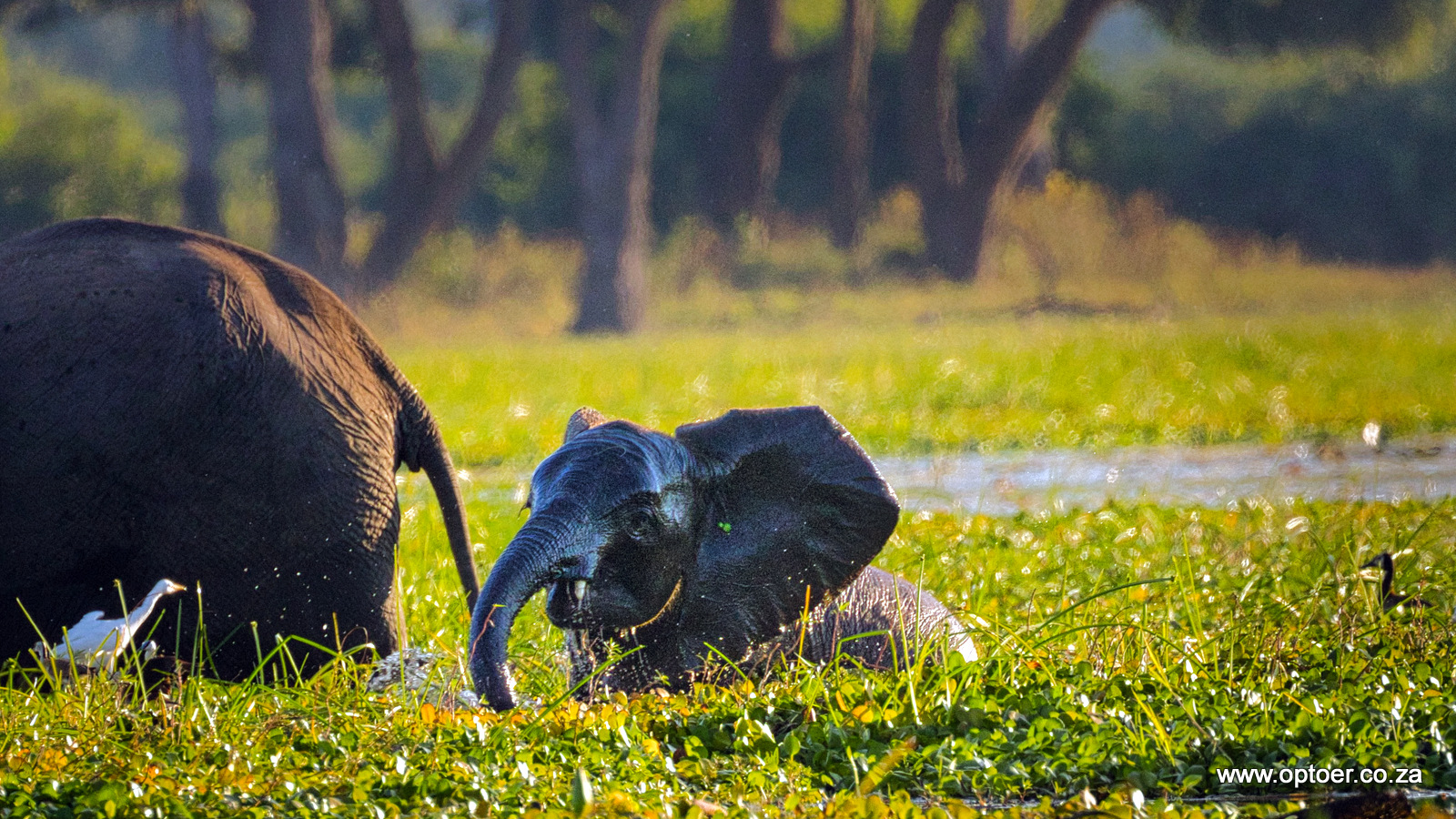
More to follow. Baboons. Impala. Birds everywhere you look. Baby elephants splashing in the water. That evening we did what we do every night: we braai. Frogs, hippos, elephants and impala all tell their stories around us.
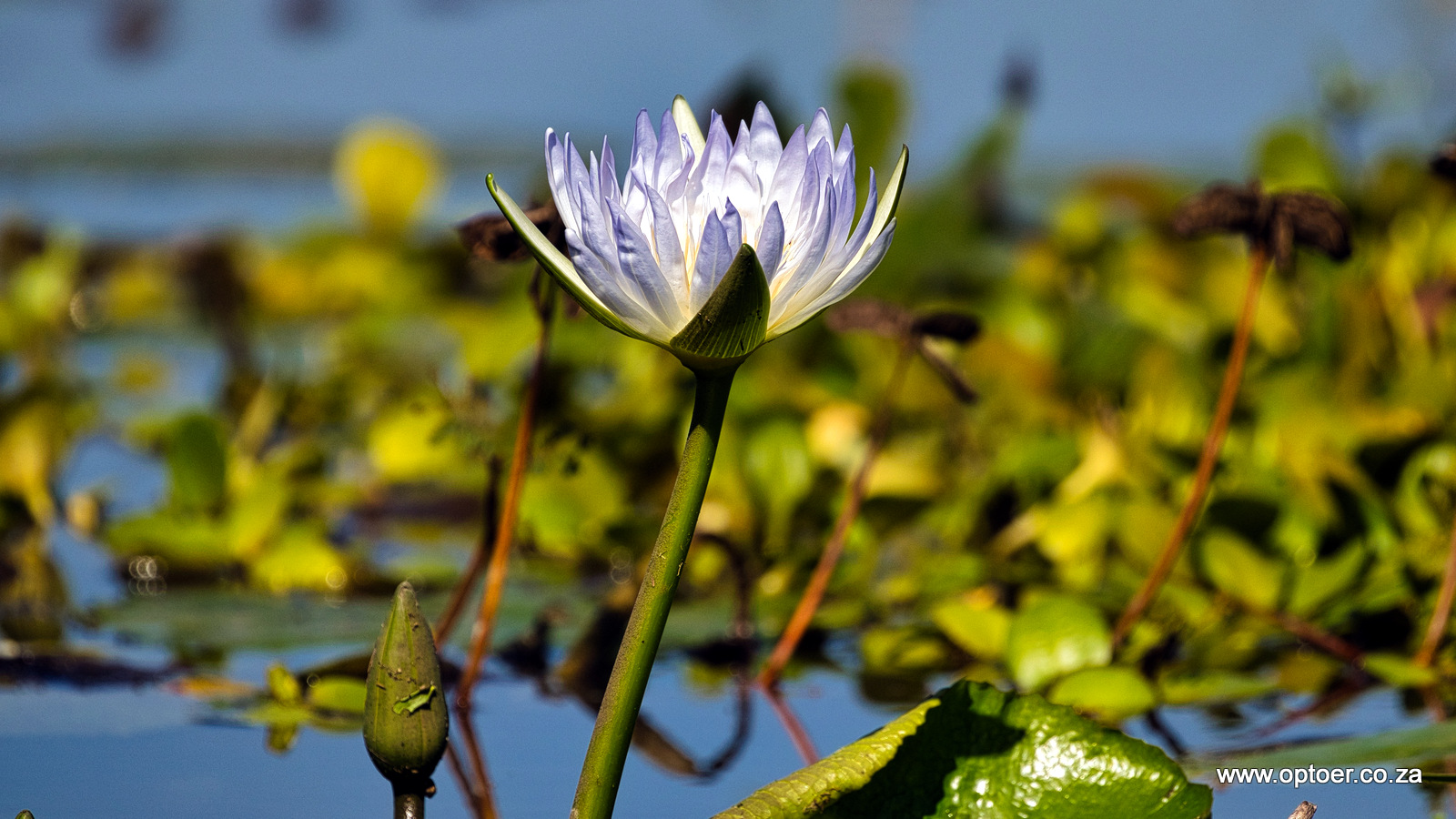
The Impala Ram and the Annual General Meeting
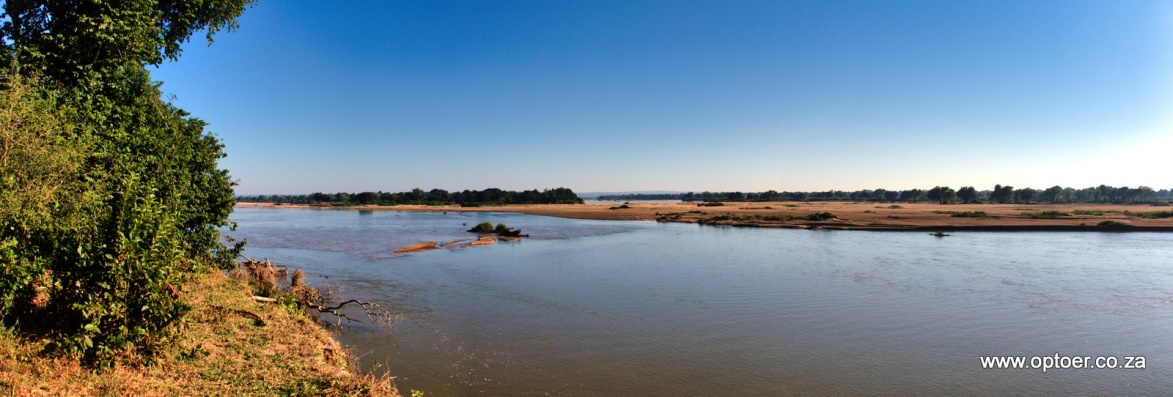
Morning game drive: marabou storks, impala, waterbuck, zebra. We find where the Runde and Save Rivers meet — a confluence that must be extraordinary when the rivers are full.
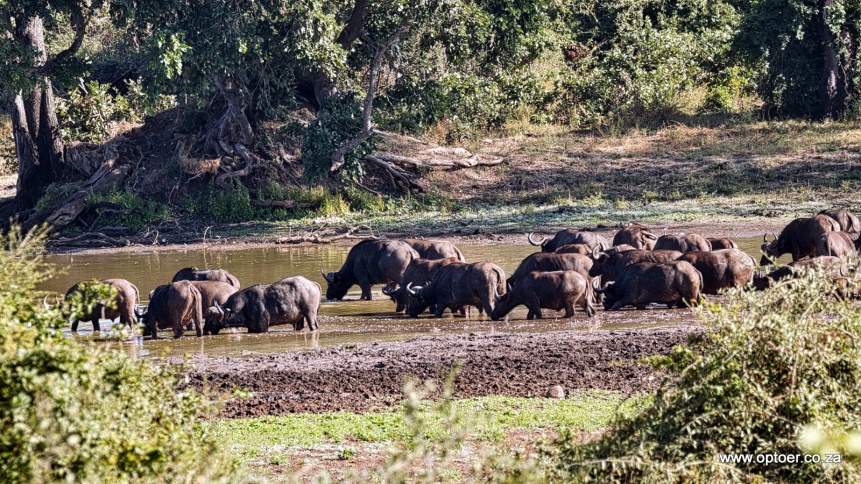
On the way back, a massive buffalo herd hurries away from us toward the water.
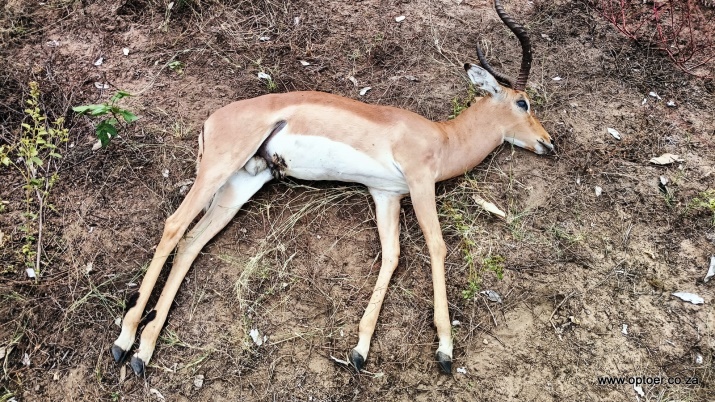
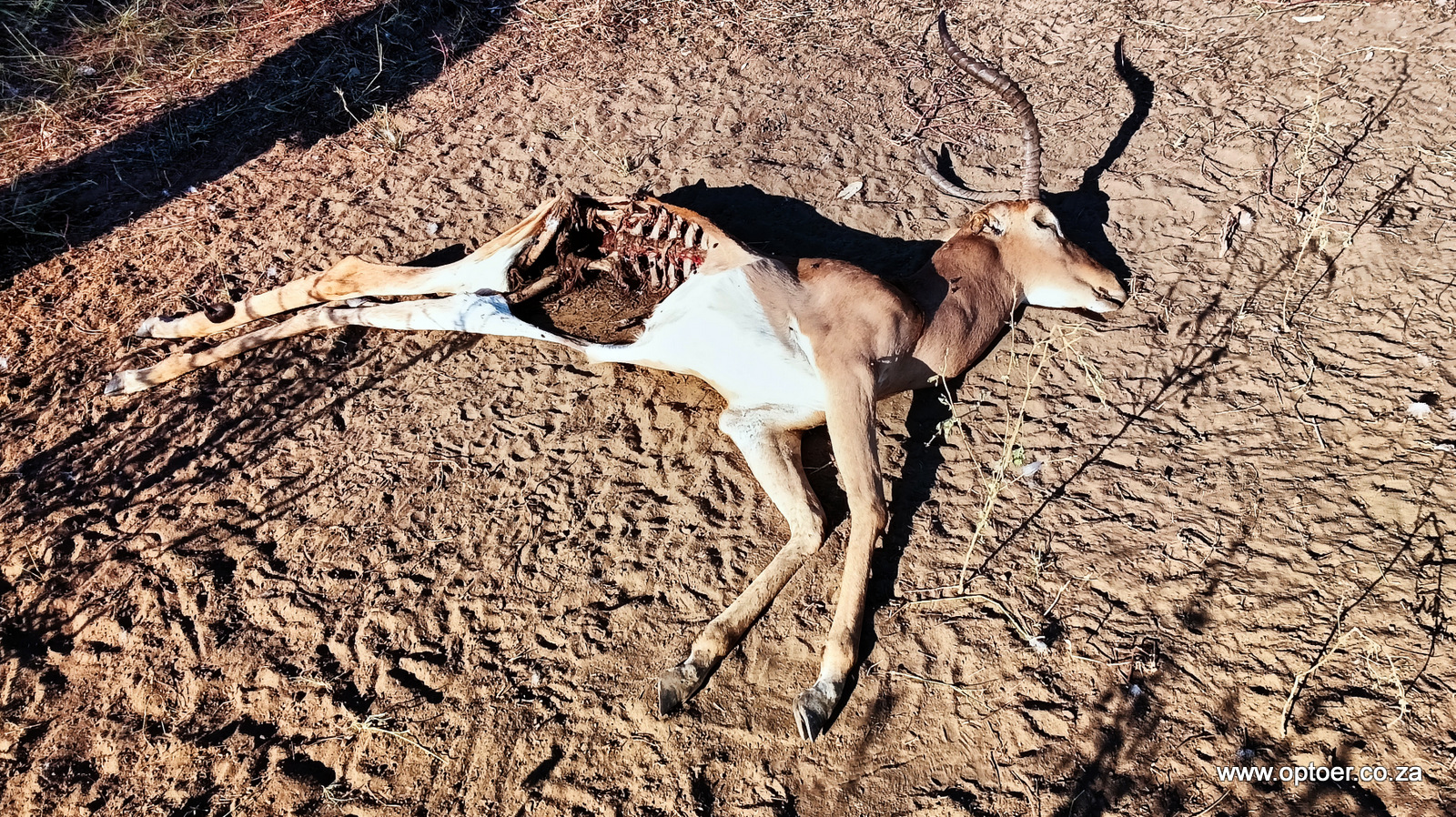
The following morning, on our way out, we spot an impala ram dead beside the road — intact, no visible cause. We speculate he lost an argument with another ram and broke his neck.
With the afternoon drive, we went back to see if anything had found him. Still lying peacefully.
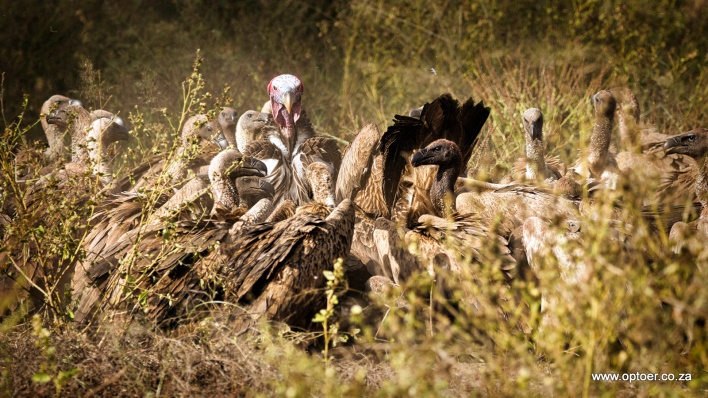
Another loop, and on our return: a vulture feeding frenzy of the sort usually seen at a corporate year-end function. Birds fighting, climbing over each other, elbowing for position at the carcass. Then, suddenly, as if someone pressed a silent alarm, they all fly off simultaneously.
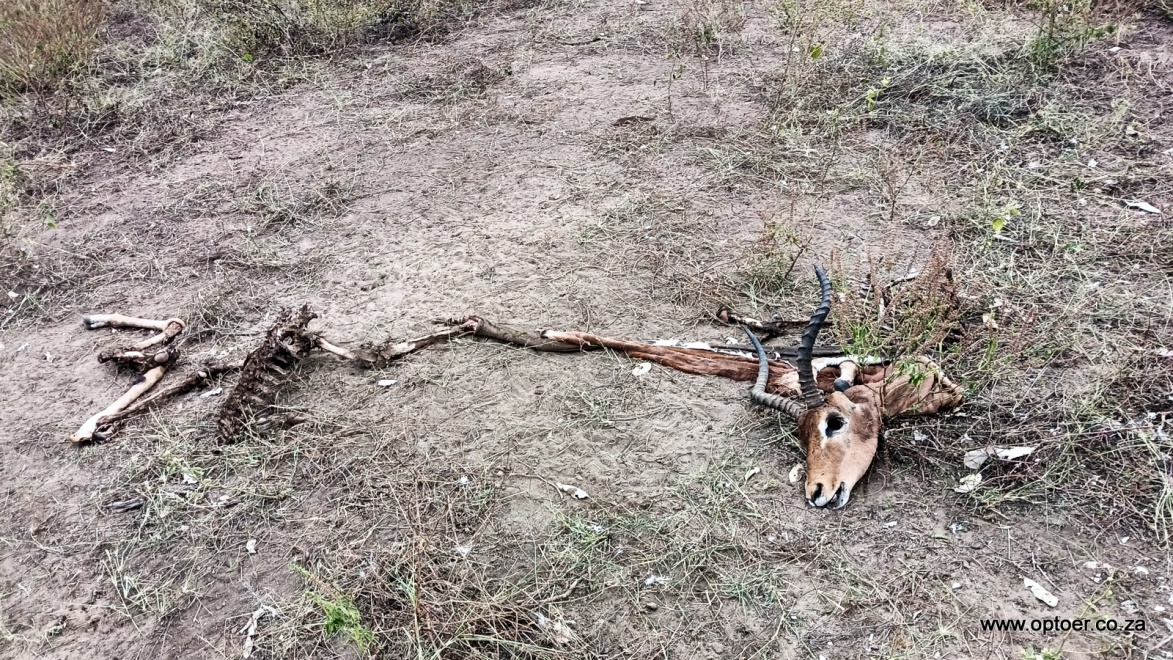
What remains: belly, haunches and back — gone.The neck, head and front legs — untouched. The eyes, also gone.
We braai in full moonlight and listen to hippos and owls.
Moving On Through Gonarezhou
We pack up and past the ram carcass again — the vultures have been back, and other scavengers, not much left — and continue on tracks that occasionally test your nerve. One in particular had my full attention, but we made it through. The caravan looked as though it had been used to plough a field, but Antie persevered
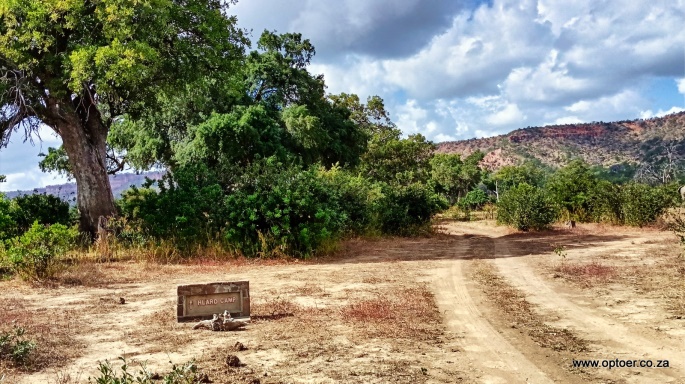
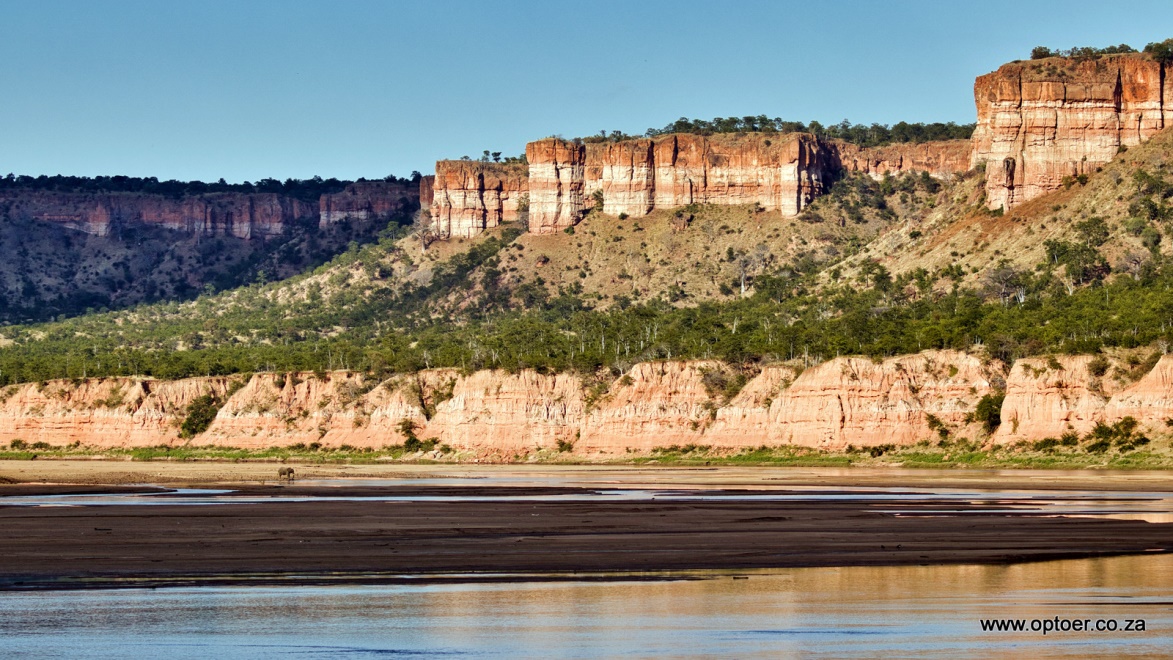
We stop at Chinguli campsite — another jewel — top up water and visit the ablutions, then push on to Hlaro campsite.
More stunned by the beauty of this part of the world. An elephant stands in the river bend exactly as if placed there for a photograph. The cliffs are something else entirely.
We parked and set up below a Jackal-berry Tree. Big mistake… (berries and berry juice really made us work hard when back at home)
That evening, a light breeze stirred while we braai.
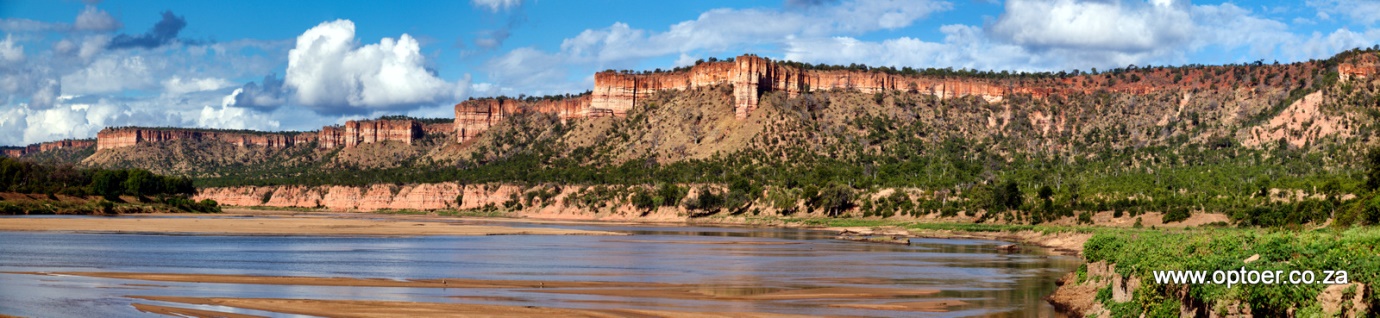
That evening a light breeze stirs while we braai. Next morning at Fishans Causeway — currently unpassable as the Runde is running too high — we find a family of ground hornbills. The route to Tonde camp past the S13 marker is indescribably beautiful.We return to Hlaro for breakfast, attempt to remove the accumulated grass and dust from the caravan and Cruiser, and accept that we're simply making room for the next collection.
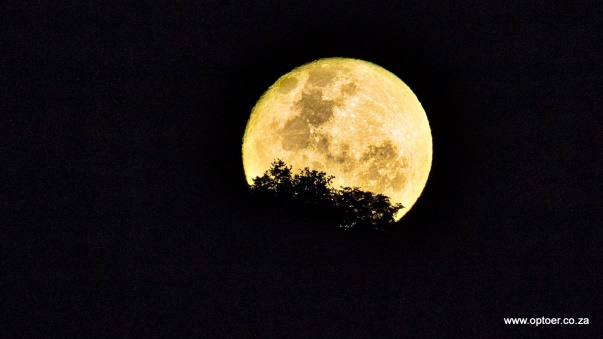
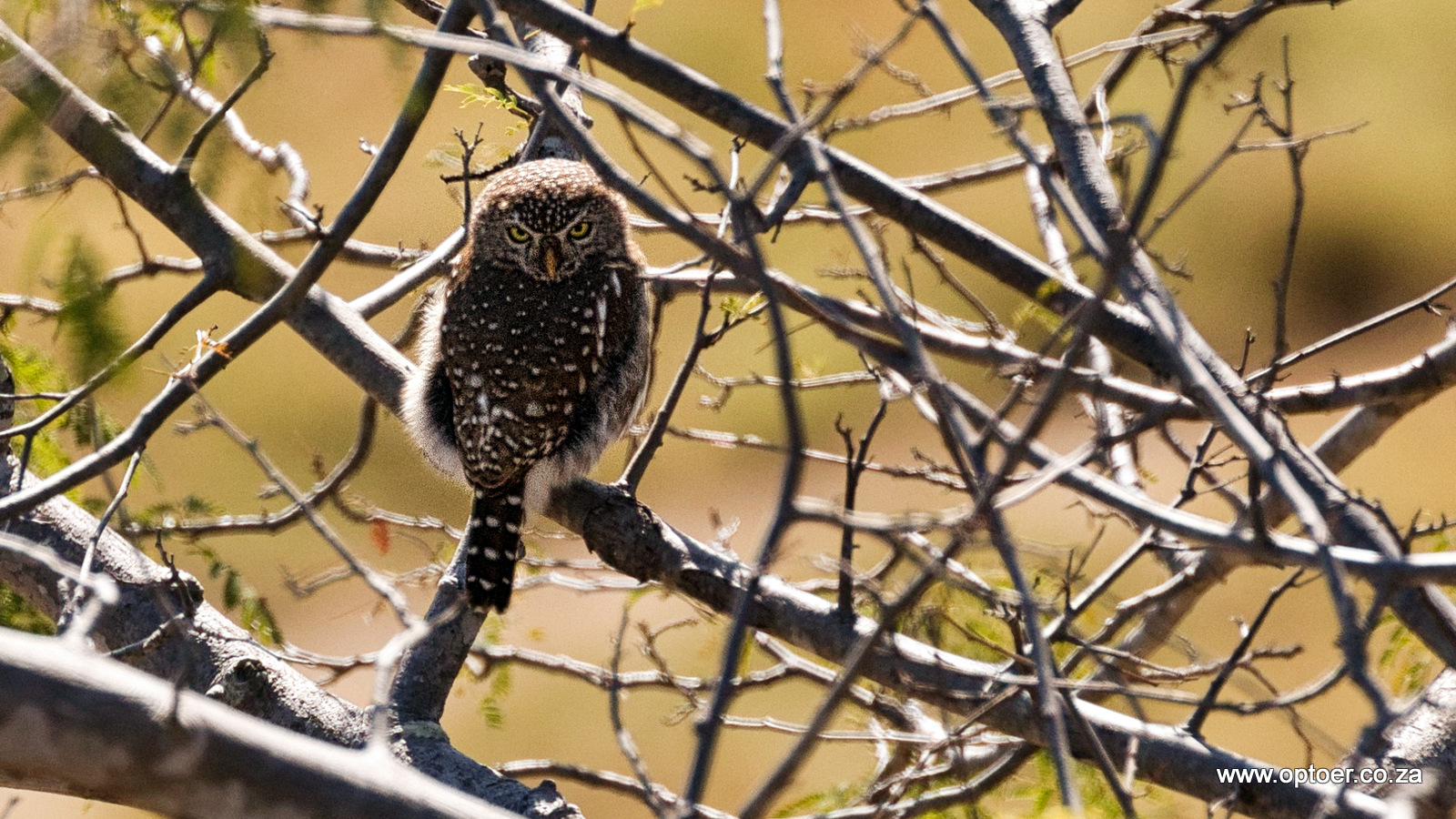
That evening while we waited for the fire, we attempt to take moonrise photographs over the Chilojo Cliffs with red wine in hand, the correct approach to photography. Through the night: lions. First far away. Then closer. Then two of them, very close to camp, announcing themselves clearly, and loudly. Next morning, we exited the tent with considerable caution, coffee in hand, looking for tracks. We drive to Benji's Weir — a lovely platform overlooking the area but other than a Spotted Pearl Owl, not much to see. It is winter but thermometer reads it is 28 degrees. We know at home, in Cape Town, it is definitely not. Baboons riot in the Jackal-berry tree above us as we make bacon and eggs below. We ignore each other by mutual agreement. That evening, we sat and stare at the Chilojo Cliffs over red wine again. We don't know if we'll ever see this again. We soak up every last bit.
The Long Road Home Begins
After coffee we head for Chipinda Pools — up and over some steep hills and passes, which the Cruiser takes easily, Antie following faithfully behind.
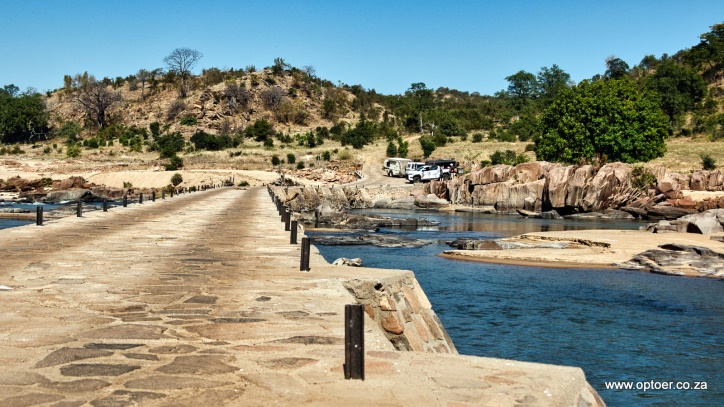
We stop at a Nkwangulatilo bridge over the Runde for coffee. The place is, in case I haven't mentioned it, beautiful.
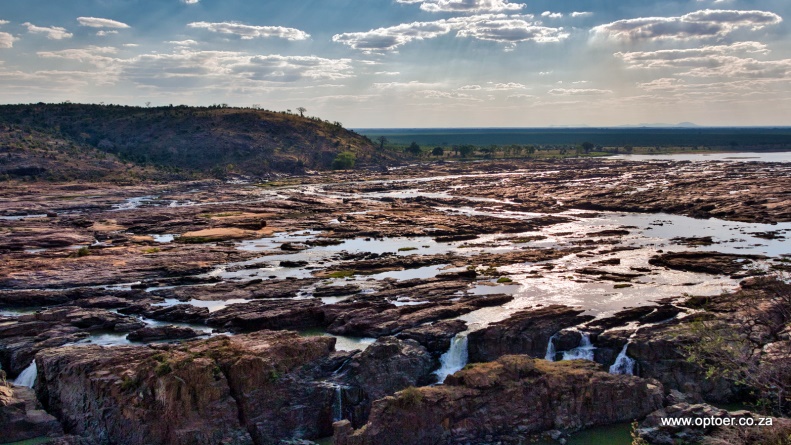
We find our campsite at Chipinda Pools. It is 27 degrees in winter. We don't want to imagine high summer. Late afternoon we visit Chivilia Falls. That evening we light a fire and, after ten days in the bush, take a proper shower. It is glorious.
Beitbridge: A Special Experience
A good gravel road takes us to the A10, then through enormous granite koppies draped in dense green trees. People living there don't know how beautiful this is. I suppose they are used to the landscape.
The A4 toward Beitbridge features a number of drivers who appear to have made peace with mortality, overtaking with magnificent indifference to oncoming traffic.
At the border, we discover that we, having a caravan on tow, must go to a different gate. Cars behind us must reverse, so we can reverse far enough to turn around. Directions issued, reconsidered, and issued again. A man appears and directs us to our spot — half-irritated but well-meaning, we assure him we'll manage.
Inside the building, a senior official explains the process, stamps our passports, directs us to Window A (US$28.80, apparently for using their fancy new building) and Window B (US$9.00, bridge toll). He is genuinely helpful. But at our car, he requests a tip. We offer a dollar. He wants five — for protection, he explains, in a way that implies the alternative. We give him his five dollars, because life is short, and proceed to wrestle through the crowds, trucks, buses, and general chaos to the South African side.
South Africa's side is also confusing, and it seems that the officials are not delighted to be there, but eventually we emerge and head for Mapungubwe. At reception, a map confirms the campsite is further than expected. Mapungubwe is remarkable — extraordinary koppies and landscape. Another note to self, definitely a place to return to.
Up at six the next morning, not really ready for the drive back home. A hyena visited Larry's vehicle in the night again. Through the darkness came the occasional wildebeest, impala, elephant. Distant lions. Hyenas calling.
We're out of camp just after seven, heading for Alldays for diesel. The koppies and trees are, as previously stated, very beautiful.In Alldays, a traffic officer stops us. Did we go hunting? No, we're coming from Zimbabwe. Could we spare a few dollars? We've spent everything on bribes, we explain. Do we have a pen? We give him a pen we know doesn't write very well anymore. Everyone parts satisfied.
We push through to Polokwane — which compares favourably to Kimberley, but only just — climb onto the N1, and weep gently at each toll gate. The road is busy. Cars, buses, trucks, the full N1 experience. We navigate Pretoria's traffic and arrive at our first night stop just after midday .